The Role of Extracurricular Activities in Holistic Education
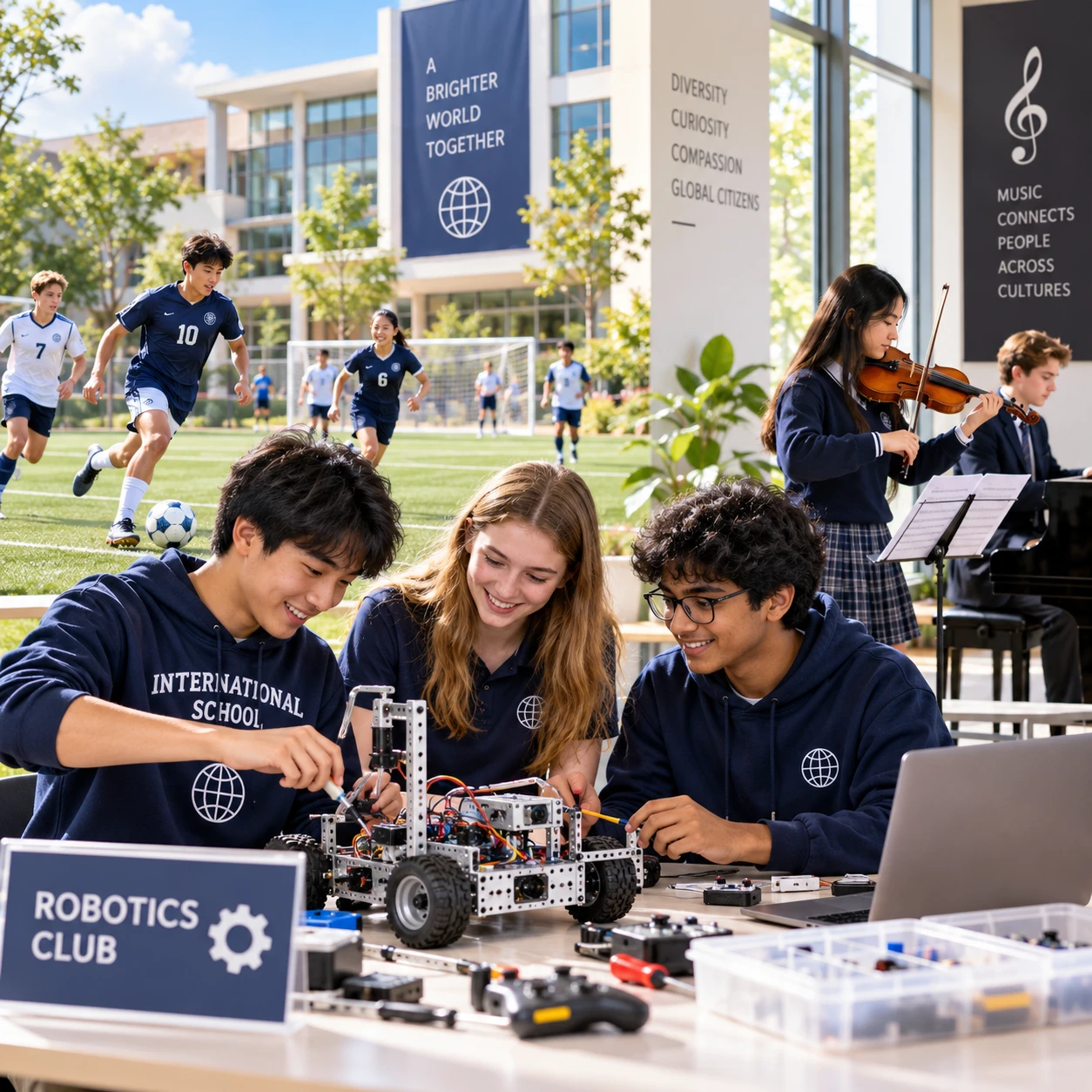
Holistic education supports the whole student: academic growth alongside physical wellbeing, emotional development, creativity, and relationships. In international schools, extracurricular activities give students practical ways to explore interests, connect with peers, and develop skills beyond the classroom. Their value depends on fit and participation, not on how many activities a student joins.
What Holistic Education Means
Holistic education develops a student’s intellectual, social, emotional, physical, and creative capacities, rather than measuring progress only through academic results. Broader learning experiences help students connect classroom knowledge with interests, relationships, and everyday challenges.
In this approach, academic achievement matters, but it sits alongside other parts of student development. A student may build confidence through drama, learn persistence in a sports team, or practice careful problem-solving in a science club. These experiences can reinforce learning, though they do not replace strong teaching or guarantee higher grades.
Extracurricular activities are organized opportunities that usually take place outside regular lessons. Depending on the school, they may include athletics, visual arts, music, debate, coding, community service, language clubs, or student leadership. Because international schools differ in size, location, staffing, and resources, families should check what a particular school actually offers.
How Extracurricular Activities Support Student Development
Extracurricular activities support student development by giving children and teenagers regular opportunities to practice social-emotional skills, express ideas, stay active, and pursue interests. The benefits vary by activity and student, so participation works best when it feels meaningful and appropriately challenging.
Social-emotional learning often happens in small moments: sharing equipment, handling a mistake, listening to a teammate, or asking for help. A group activity can give students a low-stakes setting to build relationships and develop self-awareness. Creative options such as music, visual arts, and theatre also offer ways to communicate feelings and ideas that may be difficult to express in conversation.
Movement-based activities can contribute to physical wellbeing through regular exercise, coordination, and practice with healthy routines. They are not the only route to an active life, and competitive sport may not suit every student. Dance, recreational games, outdoor education, or a noncompetitive fitness club can offer alternatives.
Activities also give students room to explore interests before deciding whether to pursue them further. A short-term art workshop may be a better fit than a year-long commitment; a student who is new to the country may prefer a welcoming club over a highly competitive team. Choice and inclusion matter as much as the activity itself.
Building Skills Beyond the Classroom
Extracurricular activities help students develop transferable skills through repeated practice in real group settings. Teamwork, communication, leadership, resilience, and time management grow when students take on age-appropriate responsibilities and reflect on how they work with others.
In a debate club, students learn to organize a point, listen to opposing views, and speak clearly under pressure. In a team sport, they coordinate roles and respond when a plan changes. These situations make abstract skills visible: students can see how preparation, cooperation, and respectful communication affect a shared result.
Leadership skills do not require a formal title. A younger student might welcome a new club member, help set up materials, or encourage a teammate. Over time, these small contributions can build initiative and accountability. Resilience develops in similar ways: students try again after a missed note, a lost match, or a project that needs revision.
Time management is another useful outcome, but it takes practice. Students who balance lessons, activities, homework, and rest can learn to plan ahead. Families and teachers can support this by helping students estimate travel and preparation time, rather than treating every free hour as available for another commitment.
The Value of Activities in International Schools
Extracurricular activities in international schools can create shared experiences among students from different languages, cultures, and educational backgrounds. Clubs and teams offer practical ways to build belonging, exchange perspectives, and develop cultural awareness.
A student who is still gaining confidence in the language of instruction may find it easier to connect through a shared interest in chess, music, robotics, or football. Activities can also introduce students to customs and perspectives beyond their own. A cultural celebration club, for example, might invite students to share traditions while learning to represent them thoughtfully and avoid treating any culture as a single story.
School offerings are not universal. Some international schools have extensive arts facilities and competitive sports programs; others may rely on smaller clubs, community partners, or activities that change from term to term. Ask about language support, accessibility, equipment costs, transport, and whether beginners are welcome. These details can determine whether an opportunity is genuinely open to a student.
For families comparing schools, the range of activities is only one consideration. The quality of supervision, the attitude toward inclusion, and the way the school manages workload may matter more than a long activity list.
Choosing Activities That Fit the Student
Families can choose suitable extracurricular activities by starting with the student’s interests, then checking the activity’s demands, accessibility, and fit with the school week. The aim is a positive experience that supports growth without turning a child’s schedule into a source of pressure.
Try this simple fit check before signing up:
- Interest: Does the student want to try it, or is the choice mainly driven by adult expectations?
- Readiness: Is the activity appropriate for the student’s age, experience, confidence, and support needs?
- Practical access: Can the family manage the schedule, fees, equipment, transport, and any language or accessibility requirements?
- Workload: Does the commitment leave enough room for schoolwork, meals, sleep, and unstructured time?
Consider a trial session or a short-term commitment when possible. A student may enjoy drawing but dislike a demanding portfolio course, or love swimming while preferring a recreational group to competitive training. Checking in after a few weeks helps families distinguish normal adjustment from a poor fit.
Student choice should remain central, while adults provide realistic boundaries. For younger children, variety and play may be more valuable than specialization. Older students might choose a sustained commitment if they enjoy the activity and can manage its demands. Neither route is automatically better.
Supporting Balance and Meaningful Participation
Students benefit most from extracurricular activities when participation leaves enough time for rest, academics, family life, and spontaneous play. A manageable schedule supports steady engagement; an overloaded one can turn a rewarding interest into another source of stress.
Before adding an activity, look at the full week, including homework, commute time, and recovery after school. Agree on a trial period, then review how the student feels and whether sleep, mood, or school responsibilities are being affected. If the schedule becomes too demanding, reducing commitments is a reasonable adjustment, not a failure.
A common mistake is choosing activities mainly for prestige or an imagined future advantage. This can crowd out a student’s own interests and make participation feel like an obligation. Another is assuming every child should join a team or perform publicly. Quiet, individual, low-pressure activities can be equally worthwhile.
Meaningful participation is a better measure than a packed calendar. One activity a student attends consistently and enjoys may offer more learning than several commitments made reluctantly. Families can ask simple questions: What did you enjoy? What felt difficult? Would you like to continue, change the format, or take a break?
Frequently Asked Questions
These answers summarize how extracurricular activities can support holistic education and how families can make practical choices. The right approach depends on the student, the school, and the demands of each activity.
How do extracurricular activities support holistic education?
They give students opportunities to develop social-emotional learning, physical wellbeing, creative expression, communication, and leadership alongside classroom learning. The results depend on a student’s interests, the activity’s quality, and a healthy level of commitment.
What types of activities can international schools offer?
Offerings may include sports, music, theatre, visual arts, debate, coding, science clubs, community service, language groups, and student leadership. Each international school has its own program, and availability may change by age group, term, or campus.
How many extracurricular activities should a student take part in?
There is no ideal number for every student. Start with one activity if the schedule is new or demanding, then review how it fits with sleep, schoolwork, and family routines before adding another.
How can families choose the right activity for their child?
Ask what the student wants to explore, check the age and skill expectations, and consider cost, transport, accessibility, and time commitment. A trial session can help reveal whether the activity feels welcoming and enjoyable.