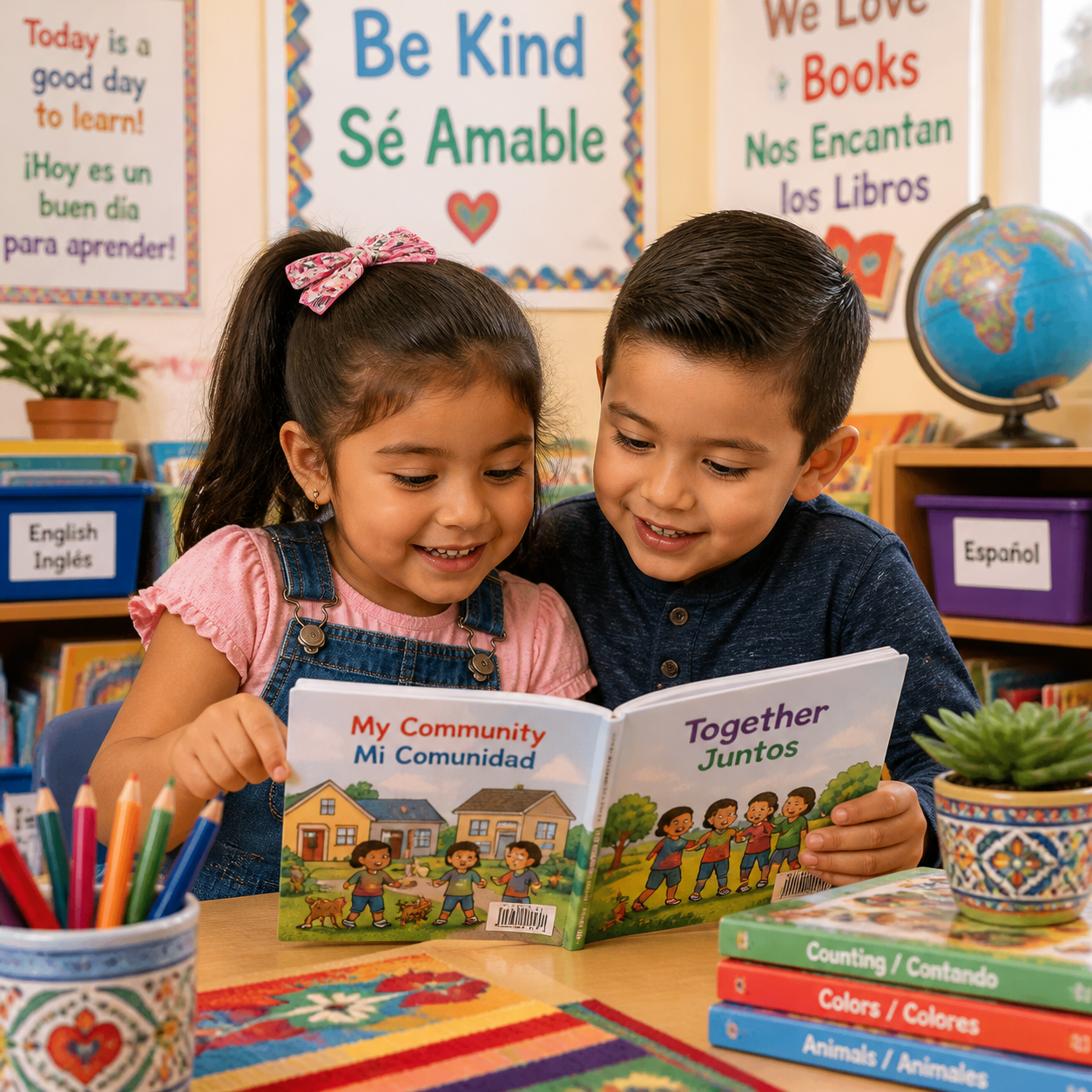
The Benefits of Bilingual Education in Early Childhood: What Parents Need to Know
Choosing the right school for a young child is one of the most consequential decisions a parent makes. If you're considering an international or bilingual primary school, you've probably wondered whether the benefits of bilingual education are as significant as people claim — or whether it's simply a trend. The short answer: the advantages are real, well-documented, and most pronounced when bilingual learning begins early.
Why Early Childhood Is the Optimal Window for Bilingual Learning
Children under the age of seven are uniquely positioned to acquire a second language with a fluency and naturalness that older learners rarely match. This is because the brain's sensitive period for language acquisition — a window of heightened neurological plasticity — is most open during the preschool and early primary years.
During this period, children absorb phonemes, grammar patterns, and vocabulary through exposure and interaction rather than formal instruction. A child who hears two languages consistently from age three will typically develop native-like pronunciation and intuitive grammar in both, while an adult learning the same language must work considerably harder for a fraction of the result.
This doesn't mean older children can't benefit from bilingual schooling — they absolutely can. But starting in early childhood means the second language becomes a natural part of how a child thinks and communicates, rather than something consciously translated from their first language.
Cognitive Advantages — How a Second Language Shapes the Developing Brain
Bilingual children consistently show measurable advantages in executive function — the cluster of mental skills that includes attention control, task-switching, and problem-solving. Managing two language systems simultaneously appears to train the brain in ways that carry over into non-linguistic tasks.
Research from developmental psychologists, including work associated with Ellen Bialystok at York University, has shown that bilingual children are often better at filtering out irrelevant information and focusing on what matters. In practical terms, this means a bilingual six-year-old may find it easier to stay on task, manage competing instructions, and adapt when rules change — skills that matter enormously in a classroom environment.
Cognitive flexibility is another well-established benefit. Switching between languages requires the brain to hold two systems active and select the appropriate one in real time. Over years of practice, this builds mental agility that supports learning across subjects. Children who grow up in multilingual environments tend to approach problems from multiple angles more naturally than their monolingual peers.
It's worth being honest here: these cognitive advantages are most consistent when children are genuinely active in both languages, not passively exposed to one. The quality and depth of the bilingual programme matters significantly.
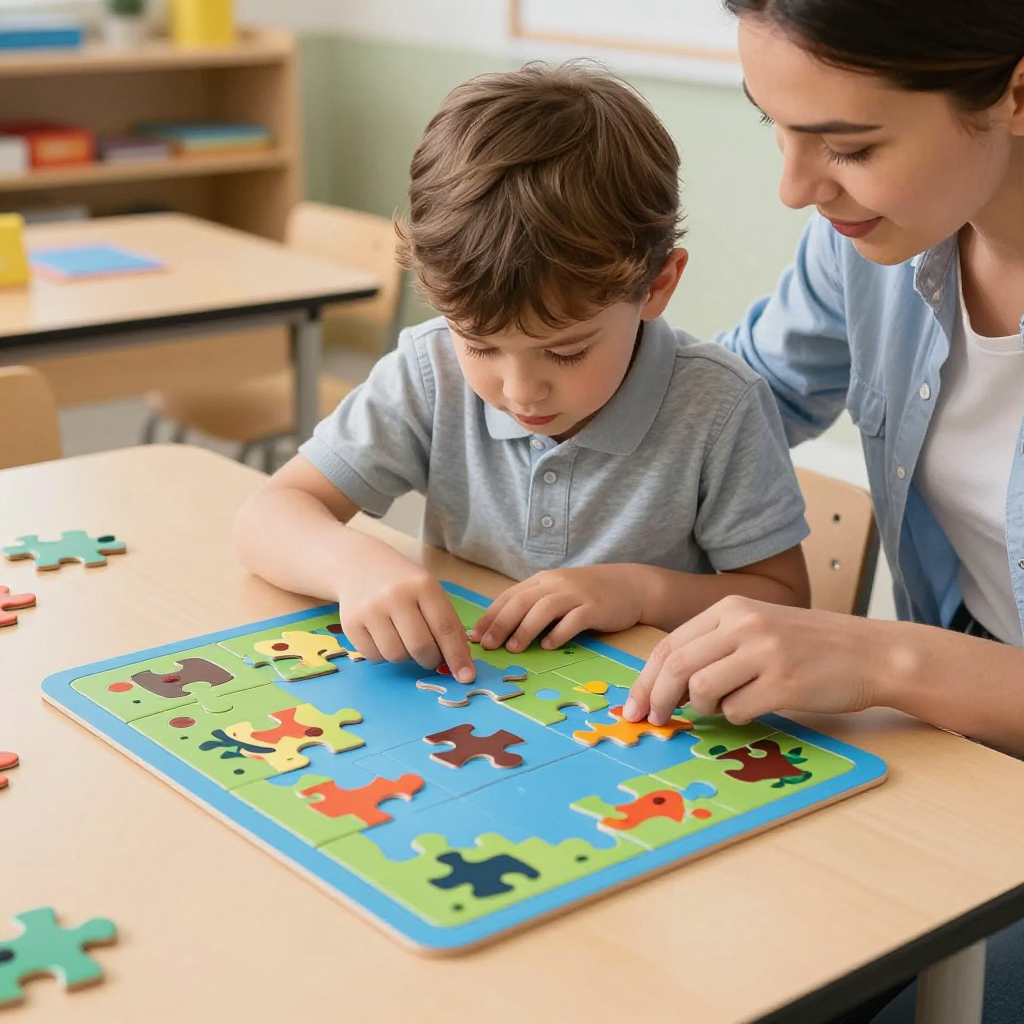
Academic and Long-Term School Performance
Bilingual learners often develop stronger literacy foundations than monolingual peers — and this advantage extends beyond language classes. Children who understand that the same concept can be expressed in two different ways develop a more analytical relationship with language itself, which strengthens reading comprehension, writing, and even mathematical reasoning.
A common concern among parents is that dividing attention between two languages might slow academic progress in the early years. The evidence generally doesn't support this. While bilingual children may have a smaller vocabulary in each individual language during the preschool years (which is entirely normal), their combined conceptual vocabulary across both languages is typically equivalent to or greater than that of monolingual children.
By the time bilingual students reach upper primary and secondary school, they frequently demonstrate stronger academic adaptability — the ability to shift learning strategies, engage with complex texts, and transfer skills across subjects. For families considering an international school pathway, this adaptability is particularly valuable when children may eventually study in a third language or move between national curricula.
Social and Cultural Benefits for Young Learners
A bilingual education does more than teach language — it shapes how children understand the world. In an international primary school setting, exposure to multiple languages and cultures builds genuine empathy and cultural awareness from a young age.
Children who learn alongside peers from different linguistic backgrounds develop stronger communication skills, including the ability to read social cues, adjust their communication style, and listen actively. These are not soft skills in the abstract sense — they are measurable competencies that employers and universities increasingly value.
There is also something quieter but significant happening: children in multilingual environments learn early that there is more than one way to name the world. This intellectual humility, the understanding that your own language and culture is one perspective among many, is a foundation for thoughtful global citizenship.
Addressing Common Parent Concerns
The most persistent worry parents bring to bilingual school consultations is language mixing — the moment a child switches mid-sentence from one language to another. This is normal developmental behaviour, not a sign of confusion. Linguists call it code-switching, and it's a sophisticated communicative strategy, not a red flag.
Similarly, the idea that bilingual education causes speech delays has been largely debunked. Some bilingual children may reach certain vocabulary milestones slightly later in each individual language, but overall language development proceeds on a typical timeline. If a child does have a genuine speech or language delay, it exists independently of bilingualism and should be assessed by a specialist.
One concern that deserves more attention is the mother tongue. Immersion programmes can be so effective that children begin to prefer the school language over their first language at home. This is worth monitoring. The strongest bilingual outcomes come when the first language (L1) is actively maintained — through reading at home, family conversations, and cultural connection — while the second language is developed at school. A good international primary school will actively support this balance rather than treat L1 as an obstacle.
What to Look for in a Bilingual or International Primary School
Not all bilingual programmes are equal. When evaluating schools, look beyond the label and ask specific questions about how language learning is actually structured.
- Programme model: Is it a full immersion programme (where core subjects are taught in the second language), a partial immersion model, or simply language classes added to a standard curriculum? Full immersion typically produces stronger results but requires a higher level of commitment from both school and family.
- Teacher qualifications: Are teachers native or near-native speakers? Are they trained in language acquisition methodology, not just subject knowledge? A history teacher who happens to speak French is not the same as a trained bilingual educator.
- Language balance: How much instructional time is genuinely delivered in each language? Some schools advertise bilingual programmes that amount to two hours of second-language instruction per week — which is unlikely to produce functional bilingualism.
- Mother tongue support: Does the school have a policy or resources for supporting children's first languages, particularly in multilingual classrooms where children may arrive with five or six different home languages?
- Continuity: Does the bilingual programme extend through the full primary years and into secondary? Switching to a monolingual environment at age ten can erode much of what was built.
Visiting the school and observing classes — not just meeting the admissions team — will tell you more than any brochure. Listen to how teachers address children, how children speak to each other, and whether the second language feels alive in the room or confined to a specific lesson block.
Supporting Bilingual Development at Home
School alone cannot sustain bilingual development — the home environment plays a meaningful role, especially in the early years. The good news is that supporting bilingualism at home doesn't require parents to be fluent in the school language.
The most effective strategy is to maintain a rich, consistent home language environment. Read aloud in your first language regularly. Tell stories, discuss the day, argue about films — anything that keeps the mother tongue intellectually alive and emotionally warm. Children who have a strong L1 foundation actually acquire second languages more efficiently, because they already understand how language works as a system.
For the school language, encourage without pressuring. If your child wants to watch a cartoon or listen to a song in the second language, support it. Celebrate small moments of pride when they use a new word or explain something in their school language at the dinner table. The goal is for both languages to feel like assets, not burdens.
Frequently Asked Questions
At what age should a child start bilingual education?
The earlier, the better — but there is no single right answer. Children who begin before age five typically develop the most natural, accent-free fluency in a second language. Starting at age six or seven still yields strong results. The key is consistency: a few years of quality bilingual schooling will outperform decades of occasional exposure.
Will learning two languages confuse my child or delay their speech?
No. Language mixing (code-switching) is normal and temporary. Genuine speech delays are unrelated to bilingualism and should be assessed independently. Most bilingual children meet developmental milestones within the typical range.
What is the difference between an immersion programme and a bilingual school?
In a full immersion programme, children are taught core subjects — maths, science, social studies — entirely or primarily in the second language. A bilingual school may use a mixed model, with some subjects in each language. Immersion tends to produce faster acquisition of the second language but requires strong support structures for children who are still developing foundational literacy.
Does bilingual education affect performance in the child's first language?
When the mother tongue is actively maintained at home and supported at school, bilingual education does not harm first-language development. In fact, strong L1 literacy often accelerates second-language acquisition. The risk arises only when the first language is neglected — which is why home support matters.
How do I know if an international primary school has a strong bilingual programme?
Ask about the proportion of instructional time in each language, the qualifications of language teachers, and whether the programme has continuity across year groups. Observe a class if possible. A strong programme will have clear language policies, qualified staff, and evidence of children actively using both languages — not just in dedicated language lessons, but throughout the school day.